
The belt
A belt first, and it has to survive being one
If the battery is flat, the electronics are dead or the module is lost, this still has to hold your trousers up. That constraint decided most of the design: the leather carries the load on its own and no wire is ever part of the mechanical path.
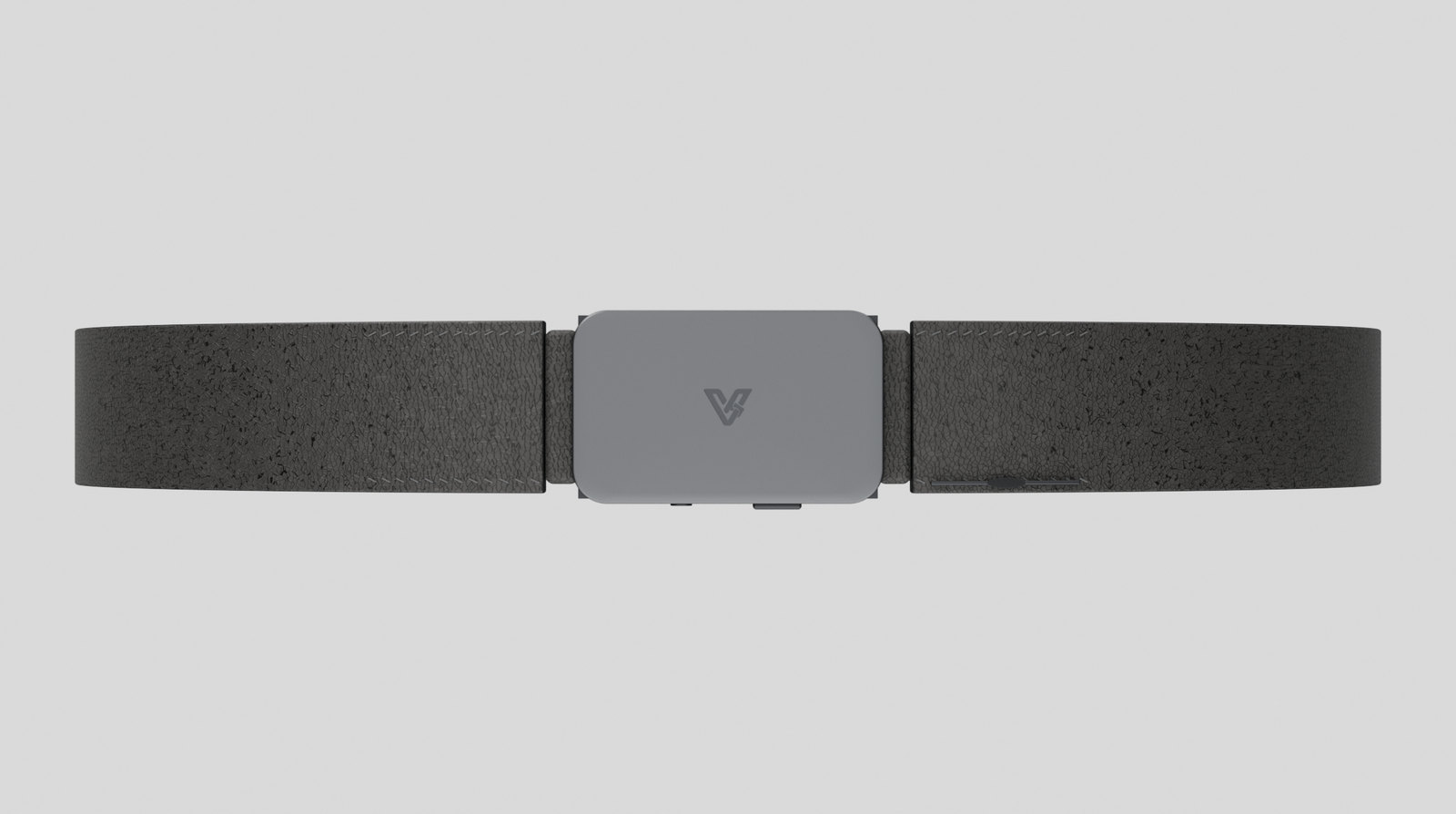
Dimensions and materials
- Strap
- 37 mm wide, 3.6 mm thick, black full-grain leather, painted edges
- Adjustment
- A ratchet, not holes. 103 mm of range in 5 mm steps, so 20 positions where a punched belt gives you five. The teeth are on the inside face of the free end and invisible from outside; a 9 mm keeper holds the tail flat
- Buckle
- 66 × 41 mm, matte anodised aluminium, purely mechanical. The only electrical thing in it is a strain gauge under the leather collar, thinner than a third of a millimetre
- What it measures
- Waist circumference, continuously, from the tension in the strap. The same signal carries breathing, meals, sitting and coughing
- Haptics
- Two zones, 50 × 23 × 3.8 mm, one at each hip
- Electronics
- 96 × 24 × 4.8 mm along the back, under one continuous skin
- Screen
- None. Nothing to look at, by design
- Sound
- None. Your phone already has speakers
- Charging
- USB-C behind a cover on the back of the belt
- Works with
- iPhone and Android, over Bluetooth. Both get the full set of controls
- Without a phone
- It keeps measuring and syncs later. Without electronics entirely it is still a belt
These are design targets taken from the 3D model, not measurements off a finished part. Anything here can move once there is real hardware to measure, and the thickness is the number most likely to.
The body side
Everything electronic faces you
From the front this reads as a plain belt, which is the point. Turn it over and the parts appear. Tap a number to see what it is.
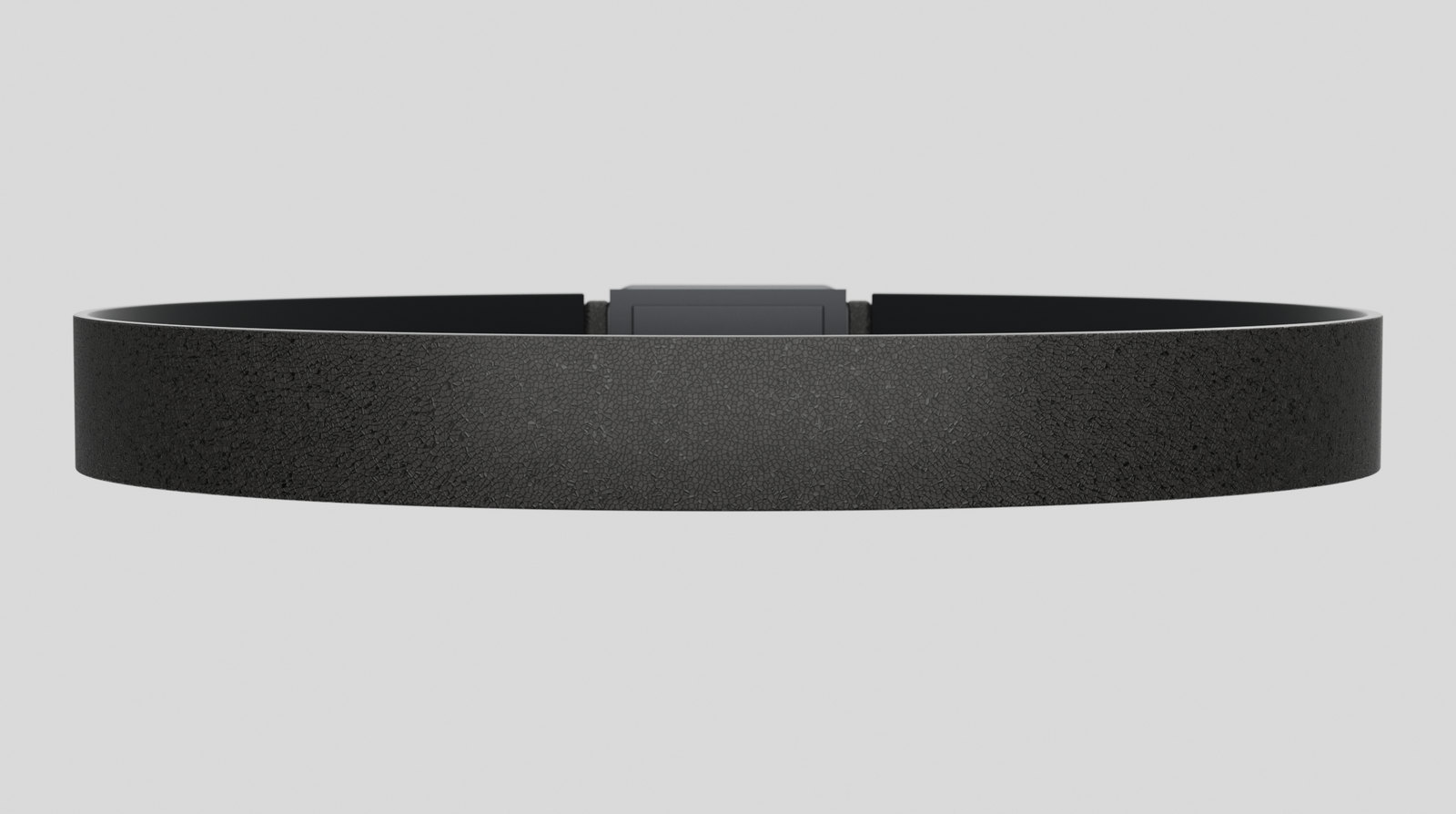
Body side. The haptic zones sit at the hips; the battery and control electronics run along the back under one continuous skin.
- 1Left hip haptics
- 2Right hip haptics
- 3Power / control spine
- 4USB-C, under a cover
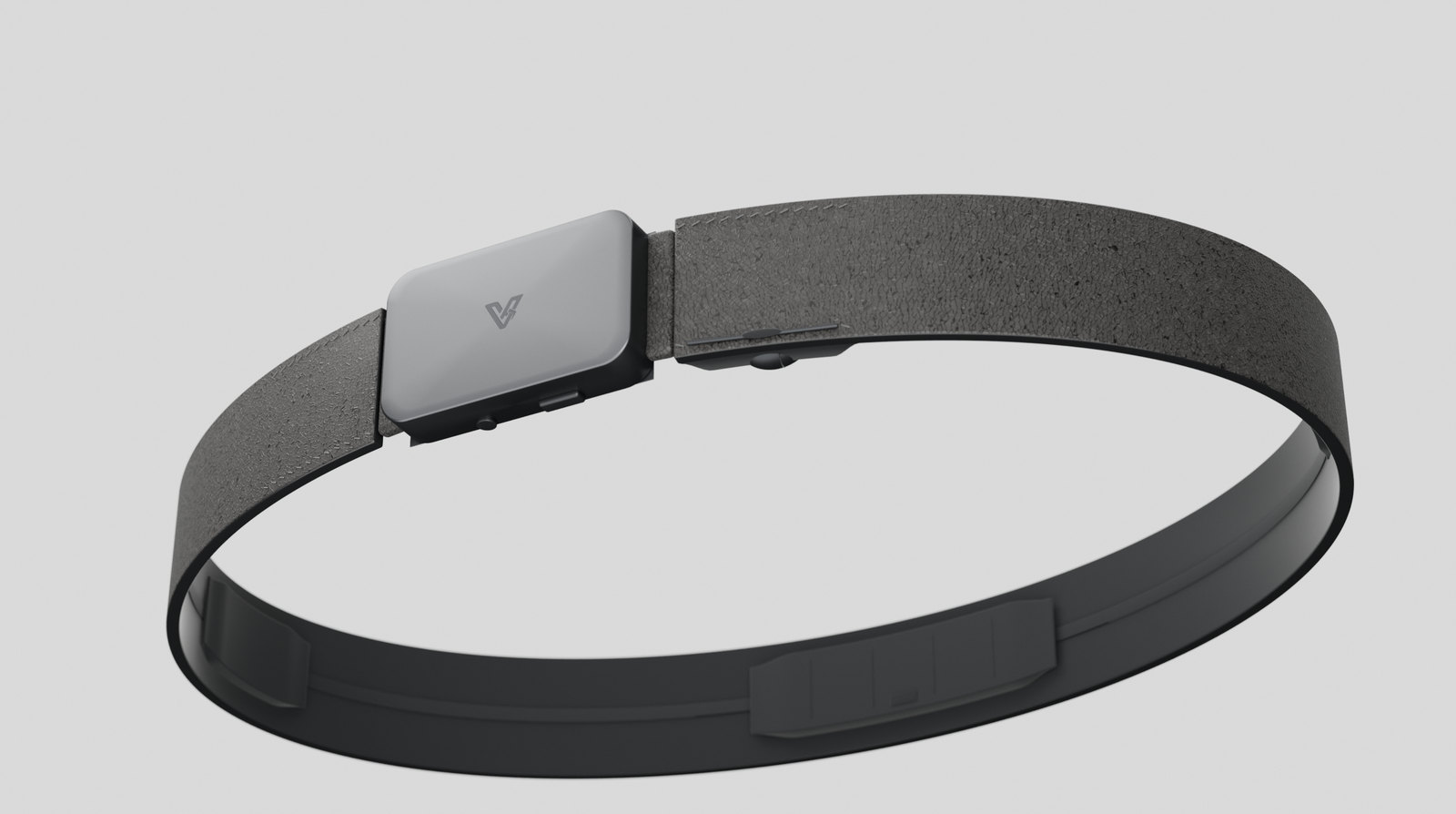
From below. The single contextual button and the mechanical buckle release are the only things you can reach.
- 1Contextual button
- 2Buckle release
Materials
Three materials, no decoration
Black full-grain leather
Full-grain means the top layer of the hide is left intact, so the surface creases instead of flaking and the belt looks better after two years than on day one. 37 mm wide, 3.6 mm thick, edges painted and burnished.
Anodised aluminium
The buckle is machined and hard-anodised to a matte graphite. Anodising is part of the metal rather than a coating on top of it, which is why it does not chip at the corners the way plated brass does.
Microfibre liner
The side against you is a soft near-black microfibre. It hides the haptic zones and the electronics spine, and it is the part that decides whether the belt is comfortable after eight hours.
Every angle
The same belt, four ways
These are not four photographs of four mock-ups. They are one 3D model shot from four camera positions, which is the only way to guarantee the buckle is the same size in every picture.
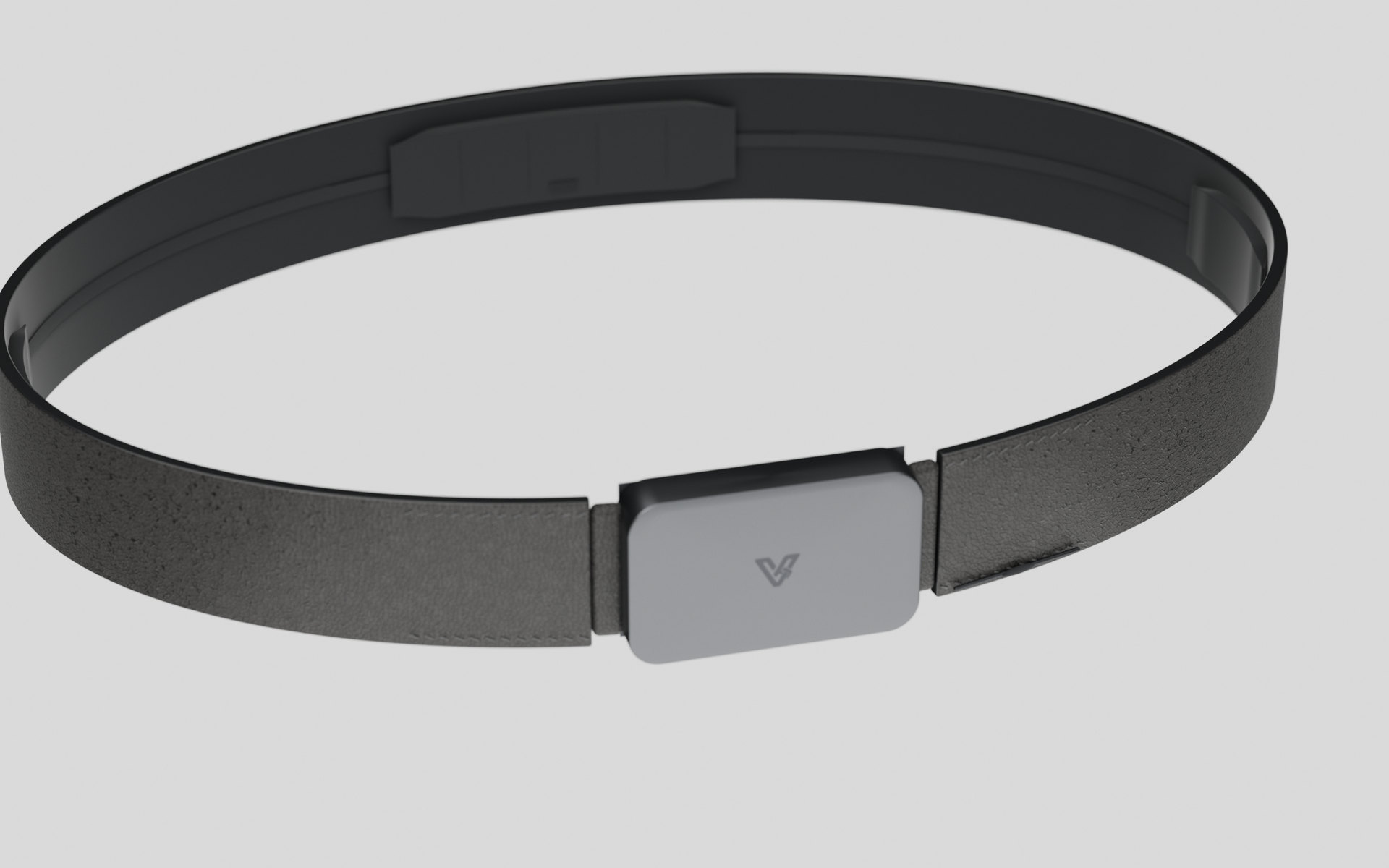
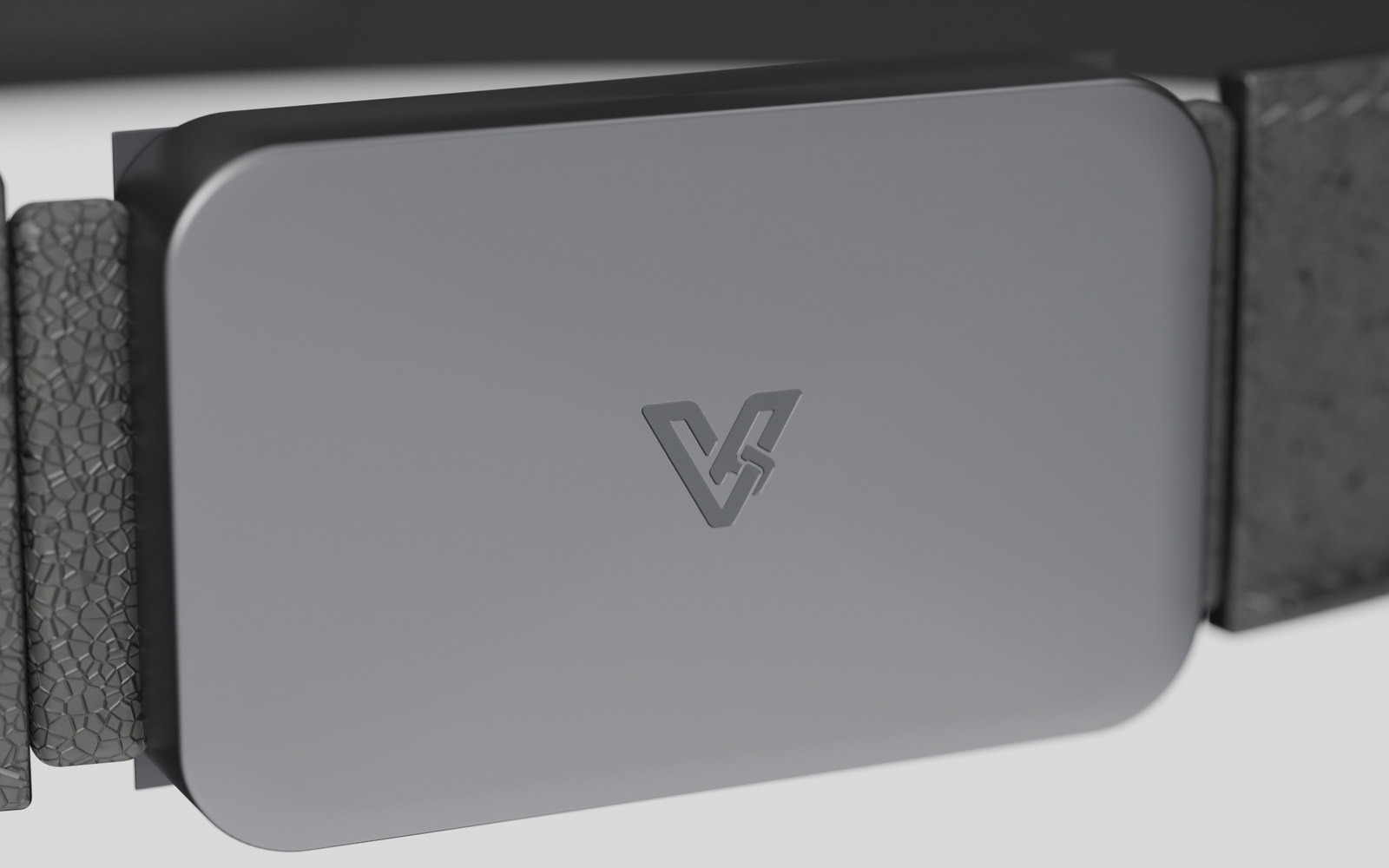
About what you are looking at
Every image on this site is rendered from one parametric design model, so the belt you see is physically the same object from every angle. It is not a photograph of finished hardware, because there is no finished hardware yet.
The finished product will differ from this in places. Once real components, stack-up, tolerances and wear testing get involved, some dimensions move and some ideas do not survive. That is what engineering does to a design, and anyone who tells you otherwise has not built anything. What we will do is change it in the direction of the best product we can make, and publish what moved and why instead of quietly replacing the pictures.
Want one when they exist?
The waitlist is the only way to be told first. No card, no obligation.
Thinking about backing it instead? Read the investor page